
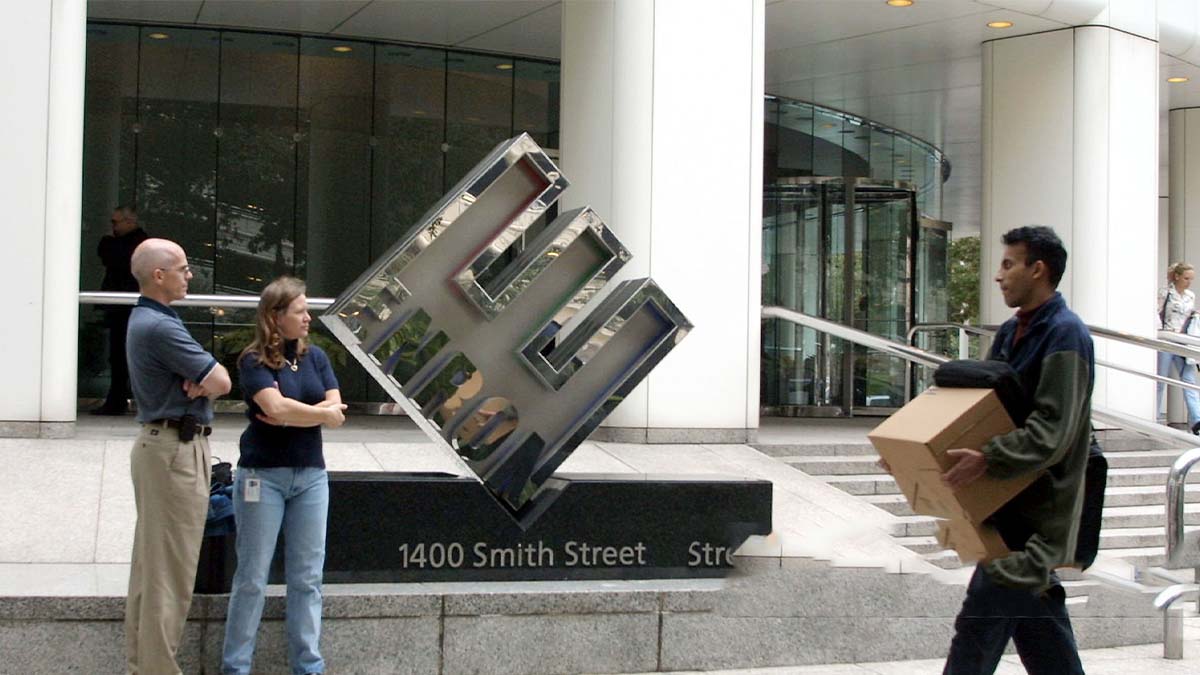
The fall of Enron is considered one of the biggest and darkest chapters of fraud in corporate history. Founded in 1985, the company rose rapidly to become the seventh-largest company in the United States within just 15 years, but in 2001, as the truth came out, it collapsed like a house of cards.
Kenneth Lay founded Enron through the merger of Houston Natural Gas and InterNorth.
In the year 2000, the company’s stock price saw a sharp surge, after which it reached $90.75.
Enron used “Mark-to-Market” accounting and “Special Purpose Entities” (SPEs) to hide billions of dollars in debt and show massive profits on paper.
In October 2001, the fraud was exposed. Within just a few weeks, the stock crashed from $90 to $0.26.
On December 2, 2001, Enron filed for what was then the largest Chapter 11 bankruptcy in U.S. history.
The impact of Enron’s collapse is still visible today in financial systems and laws:
Investors and shareholders lost approximately $74 billion. Over 20,000 employees lost their jobs, and billions of dollars in employee pensions were wiped out.
Between 2004 and 2012, the company paid more than $21.8 billion to creditors. Shareholders filed a $40 billion class-action lawsuit, out of which they received about $7.2 billion in partial compensation.
After this scandal, the Sarbanes-Oxley Act was enacted in 2002, which still sets some of the strictest standards for financial reporting for public companies.
Global figures expressed deep concern and criticism over Enron’s fraud:
Warren Buffett criticized complex accounting practices like those used by Enron, saying, “If you can’t understand what a company is doing, it’s not because you’re stupid—it’s because they don’t want you to understand it.”
Sherron Watkins compared the situation to a sinking ship while testifying before the Senate, saying, “It was like telling the captain of the Titanic that we had hit an iceberg and needed to sound the alarm—but the response was that icebergs don’t matter.”
Paul Krugman, a renowned economist, described it as “not a failure of the free market, but a crisis of corporate corruption.”
Kenneth Lay: Founder and Chairman, was found guilty of fraud and conspiracy but died of a heart attack in 2006 before sentencing.
Jeffrey Skilling: Former CEO, was sentenced to 24 years in prison (later reduced).
Arthur Andersen: Enron’s auditing firm, once among the world’s top five, completely collapsed due to its involvement in the scandal.