
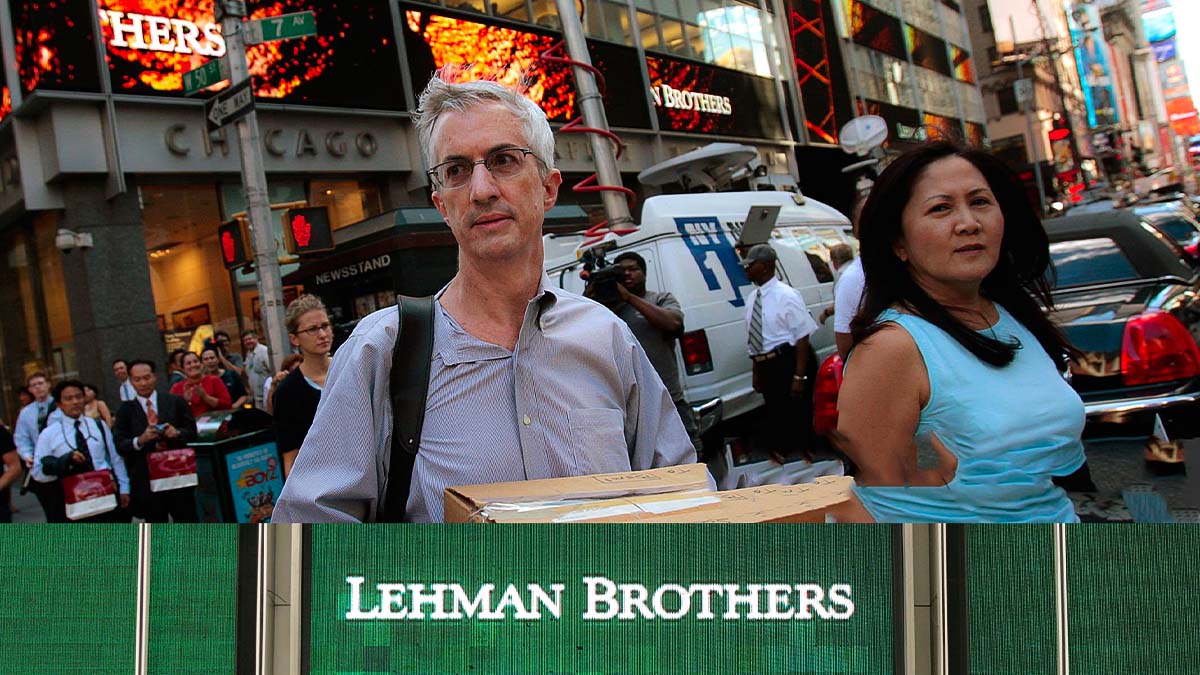
A 158-year-old financial institution that became a symbol of the largest bankruptcy filing in American history. The collapse of Lehman Brothers on September 15, 2008 was not just the end of a bank—it pushed the world into the 2008 global financial crisis.
Lehman’s downfall was not sudden, but the result of risky investments and excessive leverage:
Total Assets: At the time of bankruptcy, it had $639 billion in assets against $619 billion in debt.
Leverage Ratio: The bank had taken on 31 times more debt than its own capital ($31 in debt for every $1 of equity).
Subprime Crisis: Between 2003–2004, the bank acquired five major mortgage lenders and got heavily exposed to risky housing loans (subprime mortgages), investing billions of dollars.
Stock Collapse: Just before its fall, in September 2008, the company’s shares dropped by as much as 45% in a single day, and by the time of bankruptcy, its market value had fallen by 93%.
What’s surprising is that even after shutting down in 2008, its legal proceedings are still ongoing:
Bankruptcy Process: As of April 2026, Lehman Brothers Holdings Inc. (LBHI) bankruptcy proceedings are still active. Recently, they have been extended until December 2029, making it the last active case of the 2008 crisis.
Creditor Payments: Over $115 billion has been returned so far. Customers recovered 100% of their money, while unsecured creditors received about 41 cents on the dollar.
32nd Distribution: The 32nd round of payments to creditors was scheduled for April 2, 2026.
Experts and former employees around the world reacted strongly to Lehman’s collapse:
Richard Fuld (then CEO): He was widely blamed for the collapse. He earned millions in compensation before the fall, which experts and the World Economic Forum described as “unchecked greed” and a “failure of risk management.”
Brad Hintz (former CFO): He called the bank’s use of accounting tactics like “Repo 105” as “shenanigans,” accusing it of manipulating its balance sheet to appear stronger than it actually was.
Former Employees: On the day of bankruptcy, an employee in the London office said, “We didn’t expect this… everyone is just clearing their desks and crying.” Around 25,000 employees lost their jobs overnight.