
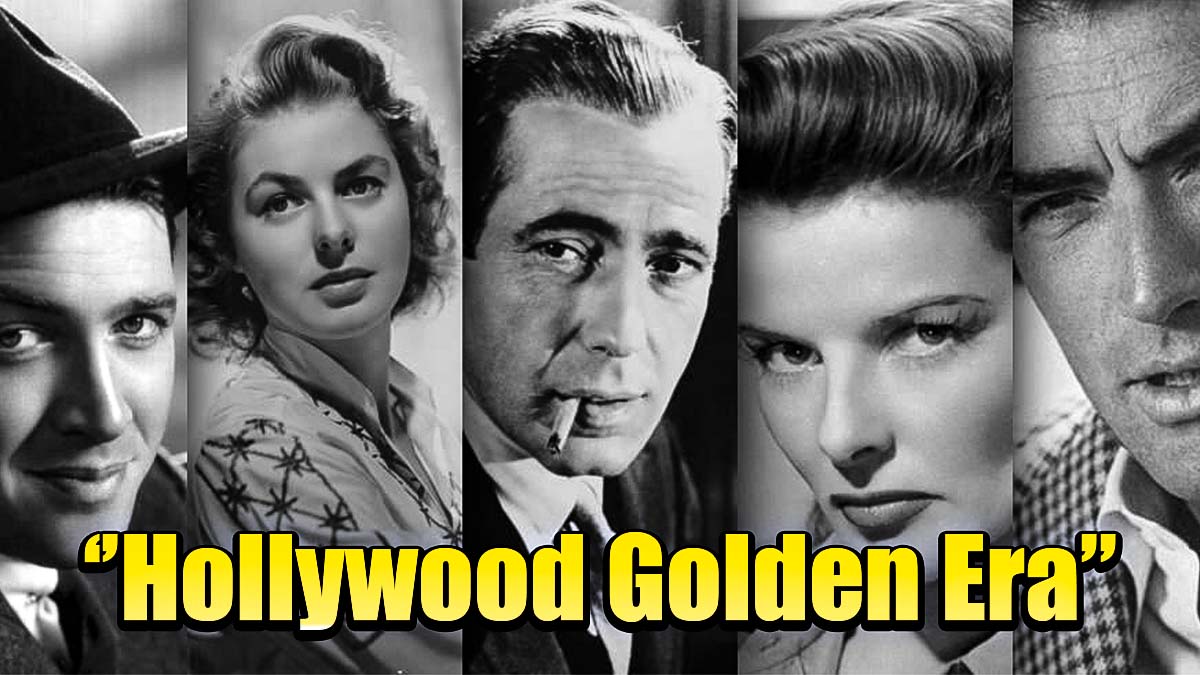
Hollywood’s “Golden Era” (1920s–1960s) was a remarkable period in cinema history that not only transformed films into a powerful industry but also introduced the world to concepts like “glamour” and “superstars.” In today’s digital and streaming age, understanding the rise and fall of this era becomes even more fascinating.
This era began in 1927 with the first talking (sound) film, “The Jazz Singer.” Before this, films were silent.
The “Big Five” studios (Warner Bros., MGM, 20th Century Fox, RKO, and Paramount) dominated the entire industry. They not only produced films but also owned theaters, giving them complete control.
Studios signed stars like Clark Gable, Greta Garbo, and Humphrey Bogart under exclusive contracts. Audiences didn’t go to watch movies by title—they bought tickets based on the stars.
The year 1939 is considered the greatest year in Hollywood history, with masterpieces like “Gone with the Wind” and “The Wizard of Oz” being released.
By the late 1940s, cracks began to appear in this golden system:
Paramount Decree (1948): The U.S. Supreme Court ruled that studios could not own their own theaters, ending their monopoly.
By the 1950s, television reached households, and people began enjoying entertainment at home, reducing cinema attendance.
By 1968, the strict moral censorship system known as the “Hays Code” ended, paving the way for more realistic and bold storytelling, known as New Hollywood.
In modern times, even Hollywood production has seen challenges. Filming activity in Los Angeles dropped by more than 20% between 2024 and 2025, mainly due to strikes and production shifting to countries like Canada and the UK.
Alfred Hitchcock said, “I am a gentleman at heart, but filmmaking requires the passion of a villain.”
Judy Garland said, “We spent precious time in dreams born of imagination, nurtured on illusions, and reality eventually destroyed them.”
Martin Scorsese often says about modern cinema that it has become more like a “theme park” (franchise films), drifting away from the storytelling art of the old era.