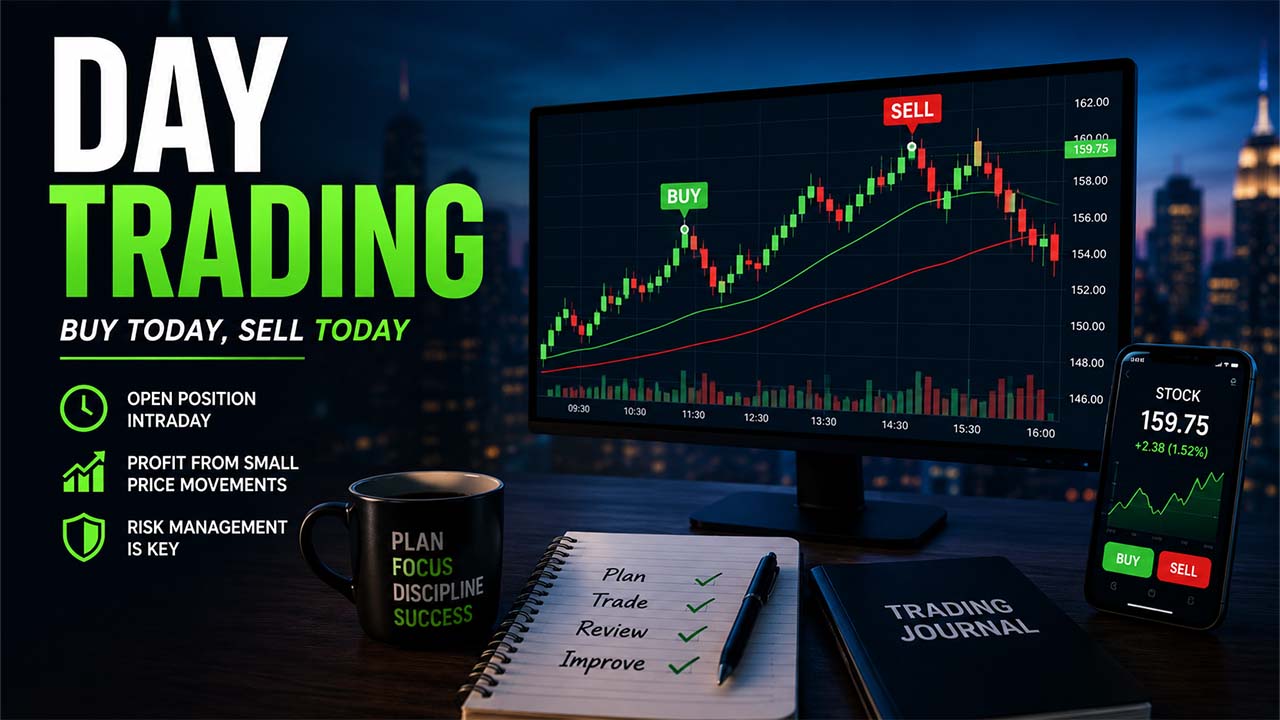
Take a look—if you want to get into day trading, the first thing you need to understand is what day trading actually is. It’s very simple to understand. If you buy a stock at a low price, let’s say $15, and after holding it for a short period you make a profit and sell it on the same trading day, that’s called day trading. But it’s not as easy as it sounds—I’ll explain why in a moment.
So what really happens in day trading?
You quickly enter a trade, and you must close your position before the trading day ends. In many cases, you sell the stock within a few minutes or hours. But many beginners forget to properly study the chart. They don’t spend enough time analyzing it because they’re only thinking about making a quick profit. That’s exactly what leads to losses. To truly understand trading, you need to build a solid strategy and use your trading time wisely.
If you don’t understand it properly, you could face significant losses. And always remember—start day trading with only a small amount of money. That gives you the opportunity to learn, and it helps you stay in the game for the long term.
How can day trading affect you?
1) The biggest thing is that if you trade every single day, your health can be affected the most. Here’s what happens: when you’re buying and selling stocks every day, losses can create fear and stress. Over time, that can negatively affect your health. That’s why it’s important to take care of yourself—go to the gym, do household work, spend time with friends, and maintain a healthy family routine.
2) Taking too many trades can lead to major losses. So stay disciplined, don’t lose control of yourself, and take only a limited number of trades. That way, your losses can stay smaller and your life won’t be affected as much.
3) Don’t sit in your chair for long periods while trading. Sitting for too long can weaken your body. Every once in a while, go outside for a short walk, then come back and continue your day trading.
4) You need to understand that you probably can’t rely on trading profits alone for a long time. You can also earn money through YouTube videos or by sharing a broker’s affiliate link to support your trading journey. And if you earned your trading capital through hard work, use it carefully.
5) The more profit you expect to make from a trade, the greater the chance that you could also lose money. That’s why it’s very important to think carefully before making any trading decision.
6) If you see a profit in your day trade, don’t rush to take it immediately. Wait for a little while, and once your profit grows a bit more, then exit the trade. But don’t wait too long either. Focus on making small profits consistently instead of chasing huge gains, or you could end up taking a loss. If you’ve already made your profit for the day, step away from your trading system. Don’t let greed take over. The desire to overtrade often ruins everything.
7) Whenever you sit down to trade, look for stocks that seem to have a higher chance of making a profit. As I mentioned earlier, you’ll need to understand the charts properly to do that. There are many different types of stocks, so spend time researching them. Then you can choose the stocks that best fit your own trading strategy.
8) Always remember to use a stop-loss in day trading. A stop-loss helps limit your losses if a trade moves against you, protecting your trading capital. And even if you’re in profit, don’t let greed make you abandon your trading plan. Stick to your strategy and exit according to your plan.
9) Knowing when to enter and when to exit a trade is just as important as choosing the right stock. Don’t enter a trade without a clear reason, and don’t stay in it longer than your strategy allows. A disciplined entry and exit can make a big difference in your results.
10) As I mentioned earlier, avoid taking too many trades in a single day. Overtrading often leads to emotional decisions and unnecessary losses. Focus on quality trades, not quantity.
11) Never take a trade without thinking it through. Before entering any position, make sure it fits your trading strategy, your risk management rules, and the current market conditions. A well-planned trade is always better than an impulsive one.
This article is for educational purposes only and should not be considered financial or investment advice. Trading involves risk, and you can lose money.